
THE DON QUIJOTE / TOYS “R” US ACQUISITION: DISSOLVING BIG-BOX RETAIL FOR ADULT IP ARBITRAGE
Humberto Saabedra
1. The Macro Paradox: Record Market Growth vs. Format Bankruptcy
On paper, Toys “R” Us Japan’s consecutive net losses seem attributable to standard macro headwind narratives: Japan’s historic birthrate decline and e-commerce cannibalization. However, industry telemetry reveals a stark paradox: The Japanese domestic toy and character market hit a record high of ¥1.166 trillion in FY2025 (up 6.3% YoY).
Growth was overwhelmingly driven by adult collectors and character IP: trading cards (up 8 consecutive years to represent ~30% of total market sales), hobby figures (+¥11.5B), and adult plush (+38.2%). Toys “R” Us Japan failed not because Japanese consumers stopped buying toys, but because its 1990s-era suburban “category killer” format was structurally incapable of capturing high-margin adult IP collector arbitrage.
| OPERATIONAL VECTOR | LEGACY TOYS “R” US JAPAN | PPIH / DON QUIJOTE PLAYBOOK |
|---|---|---|
| Target Demographic | Parents & Infants (Shrinking) | Kidults, Inbound Tourists, Night Shoppers |
| Merchandise Mix | Low-Margin Child Play & Nursery Goods | Trading Cards, Anime IP, High-Margin Character Goods |
| Real Estate Footprint | Suburban Big-Box / Mall Anchors | High-Density Compressed Urban & MEGA Donki Depots |
| Acquisition Valuation | Distressed Asset Sale (~¥10B) | ¥66.6M ($420k) per store asset entry price |
2. Three Strategic Signals in the Acquisition
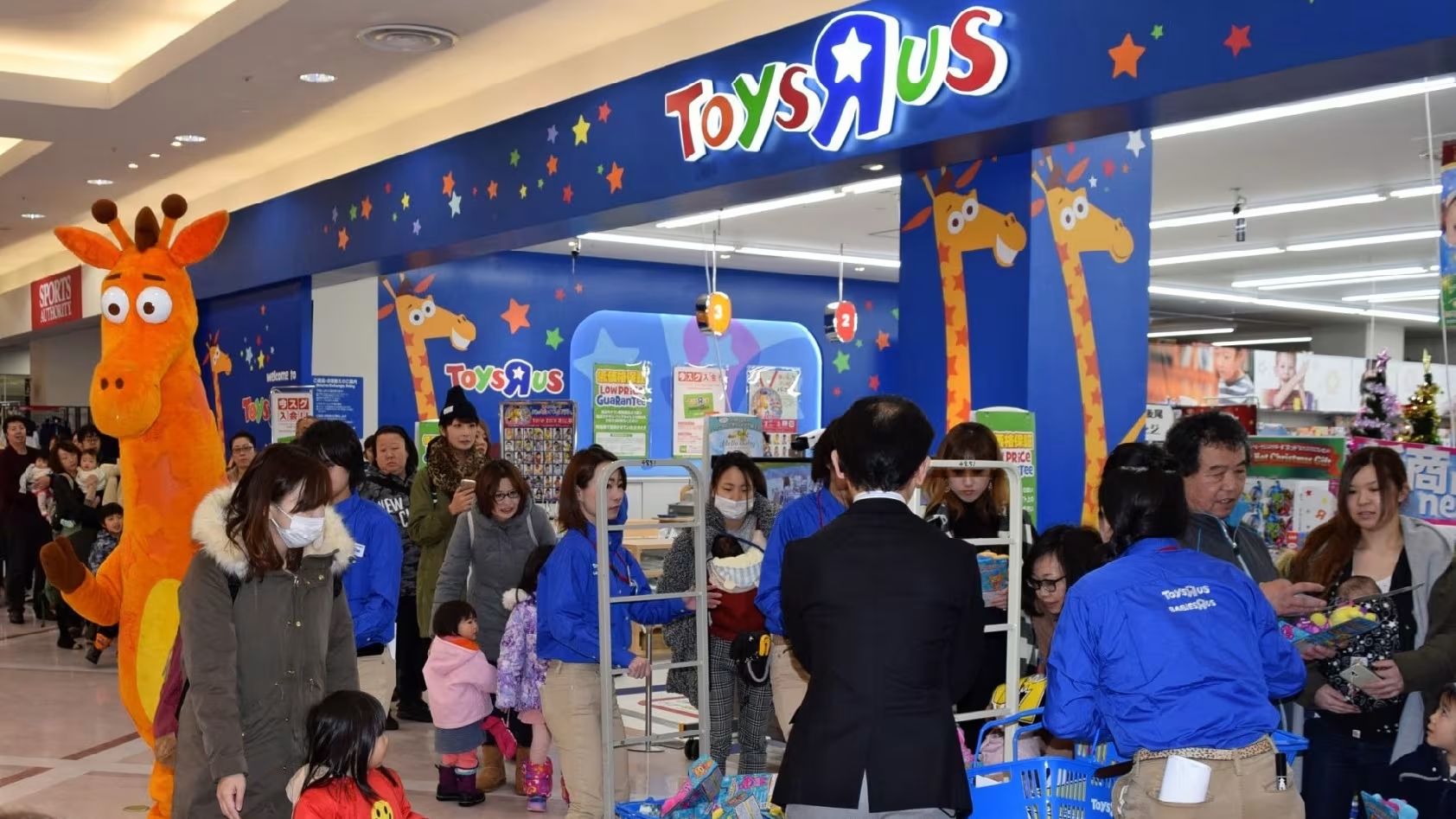
A. Distressed Real Estate Arbitrage (The MEGA Donki Conversion): At ¥10 billion for 150 turnkey retail units, PPIH is buying prime Japanese suburban real estate and leasehold rights at a fire-sale valuation (~¥66.6 million / $420,000 per store location). PPIH has spent a decade perfecting the conversion of struggling big-box footprints (e.g., former Uny/Uny FamilyMart stores) into high-yield “MEGA Don Quijote” destinations.
B. Inbound & Otaku Merchandise Synergy: Don Quijote is the single largest brick-and-mortar beneficiary of Japan’s inbound tourism boom. By absorbing the Toys “R” Us store network, PPIH secures immediate physical distribution pipelines for high-margin character merchandise, trading cards (Pokémon, One Piece, Weiss Schwarz), and licensed anime collectibles directly in secondary suburban hubs.
C. The Death of Single-Category Retailers in East Asia: Mono-category retailers (toys, books, CDs) cannot survive high Japanese urban/suburban commercial rents without cross-subsidization. Consumers buy commodity toys from Yodobashi/Bic Camera (to harvest 10% credit points) or Amazon. Specialty physical space must be experiential, impulse-driven, and multi-category—PPIH’s exact core competency.